FitHer / Postpartum
Postpartum
Postpartum weight loss coaching that starts with eating enough
Losing weight after a baby takes as long as it takes, and it's different for every woman. What works is eating ENOUGH, putting protein first, getting back to strength training once your provider clears you, and protecting your sleep and recovery as best you can, instead of slashing calories while your body is still healing.
I'm Lindsay Clements, a Functional Nutrition and Metabolism Specialist, Certified Nutrition Coach and Certified Personal Trainer, and I coach women online through FitHer. I've coached 300+ women over the last 5+ years, and I've been postpartum twice myself.
I had two babies in two years, right in the middle of a global pandemic. After my second, my body didn't feel like mine anymore. I was checking my boxes every day and still gaining weight, and I found out later that my cortisol production was completely flatlined. That's what sent me into functional nutrition, and it's why I look a lot further than the scale with my postpartum clients.
★★★★★ 5.0 on Google from 49 reviews · 300+ women coached
How long does it take to lose the baby weight?
There isn't one timeline, because it's different for everyone. How your pregnancy went, how your birth and recovery went, whether you're feeding, how much you're sleeping (or not), how much stress you're carrying and how much you're eating all play into it.
Some of my clients see the scale move in the first few months. For others the first real progress shows up somewhere else, like more energy, lifts going up, or jeans that fit again, long before the scale catches up. That's why we look at weekly averages and the full picture, never one weigh-in on a morning after the baby was up four times.
I won't promise you a number by a date. I'll give you a plan that fits the season you're in right now and adjust it as your body, your baby and your schedule change. I'd much rather you lose it slowly and keep it.
How do I lose weight while breastfeeding without hurting my milk supply?
Eat enough, go slow, and keep the changes small and conservative. Making milk takes a lot of energy, and an aggressive calorie deficit is the last thing your body needs while it's feeding a baby.
With breastfeeding clients we usually start at maintenance, or very close to it, and build habits first: protein at every meal, fiber, plenty of water, mostly whole foods, and nothing off limits. If you're hungry, eat. A good snack with protein and fiber is always the answer here, and please don't starve yourself trying to speed things up. Once you're consistent and your numbers settle, we can talk about a small, gradual change and watch how your energy, hunger and supply respond before doing anything else.
If you ever notice your supply dropping or you're worried about it, talk to your provider or a lactation consultant first. They're the right people for that, and I'll adjust your plan around whatever they tell you.
Why can't I lose weight postpartum?
Usually something underneath is getting in the way, and it's very rarely effort. Broken sleep makes hunger harder to manage, stress keeps your body on high alert, your body is still recovering from growing and delivering a human, and plenty of women are eating less than they realize between feeds, naps and everything else.
Stressed bodies hold on. When a client is doing everything right and nothing is moving, there's nothing that you're doing wrong, we just have to work smarter, not harder. That often means eating more, sleeping more where we can, and lifting instead of running yourself into the ground.
Sometimes it's worth looking deeper. After pregnancy, things like thyroid function, iron and cortisol can be worth a look (for me, it was cortisol). With the optional Labs add-on, we look at a functional lab panel together, and the results may suggest where your body needs more support. Anything that needs treatment or medication is a conversation with your doctor, and your protocol is something you can bring to them.
When can I start strength training after giving birth?
Once your provider clears you, and then you start conservatively. Clearance doesn't mean jumping back into the weights you lifted before pregnancy. We start lighter, with fewer sets, focus on breathing and form, and build back up week by week.
Your core does a LOT of work in compound movements like squats, rows and presses, so you don't need 100 crunches a day to get it strong again. Strength training 2-4 times a week is the goal once you're ready.
If you're dealing with leaking, heaviness, pain, or separation in your abs (diastasis recti), please see a pelvic floor physical therapist. I don't treat diastasis recti or pelvic floor issues. A pelvic floor PT is the right person for that, and I'll build your training around their guidance.
How do I find time to work out with a baby?
Shorter workouts, done more often. That's what builds the habit, and it's exactly why I built the FitHer Daily 20: 20-minute workouts you can do during a nap, and the goal is at least 5 days out of 7. If you'd rather train at home, the FitHer Home program only needs dumbbells and a bench, with bands as an option.
Some weeks even 20 minutes isn't happening, and that's okay. Those are the weeks for bare-minimum goals, like hitting your protein and getting a walk in with the stroller. There are seasons for a reason, and the first year with a baby is a season where protecting the basics counts. When you're spread thin, the priority order is calories, then protein, then steps, then strength.
With a newborn, you'll probably need a plan for a normal week, a plan for a crazy week, and a plan for getting back on after you've fallen off, sometimes all in the same month.
What if I get pregnant again?
Then we keep going, carefully. There's a FitHer Prenatal program built for exactly that, and it's conservative by design. Every change gets cleared with your provider, and the focus shifts to feeling good, staying strong and fueling well instead of fat loss.
One of my clients, Jenna, lost 60 lbs in her first year postpartum. In her review below, she shared that she's pregnant again and still lifting 3 days a week.
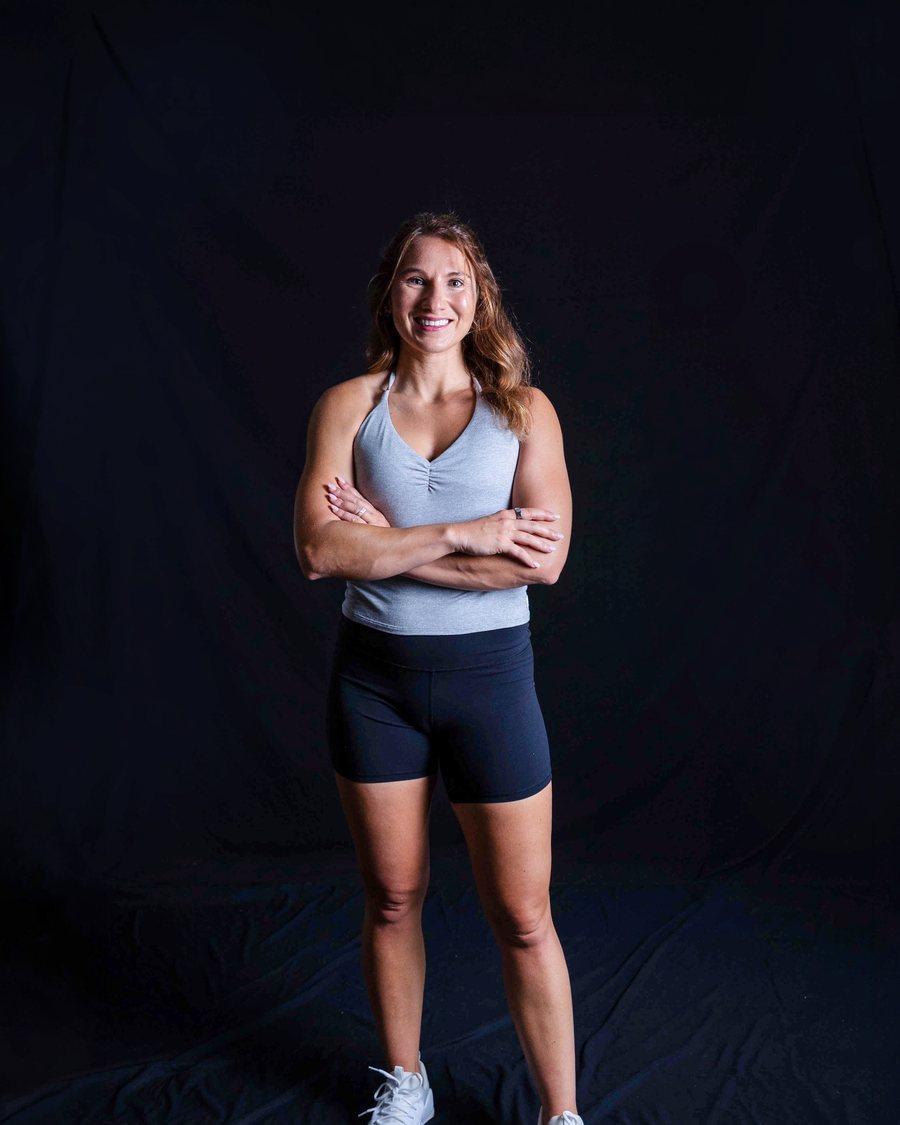
Written by Lindsay Clements
I'm the coach behind FitHer. I've coached 300+ women online over the last 5+ years, and I healed my own binge eating and postpartum metabolism issues before I ever coached anyone else.
Functional Nutrition and Metabolism Specialist · Certified Nutrition Coach · Certified Personal Trainer · M.S. in data analysis · U.S. Navy veteran (12+ years)
How we work on this in FitHer
Every FitHer program runs on the same three phases. Foundations comes first: eating enough, protein, fiber, sleep where you can get it, steps, and workouts that fit your schedule. Most clients spend a minimum of 4-6 weeks here, and if you're still healing or feeding, we can stay as long as you need.
Progress and fat loss only starts once the basics are consistent and your body is ready, with conservative changes and diet breaks planned in. Then we reverse and maintain, bringing you back to maintenance calories so you keep your results. There is absolutely NOTHING wrong with maintenance, and a lot of postpartum women need to hear that.
On FitHer Coaching and FitHer Custom, I review your check-in every week and we adjust together. On Custom, your training plan is written just for you. The Labs add-on is there if you want to look at your hormones, thyroid, cortisol and iron with real bloodwork.
What women say
"I'd never before tracked macros while eating so much food. I lost 60 lbs in my first year postpartum and ran my fastest 5K! ... Now I'm pregnant again, still lifting 3 days a week and progressing on all my lifts."
"I had a 6 month old, was moving to a new town with a new job and went from living in a home with a home gym to an RV with a set of dumbbells! Lindsay made workouts that fit my life and goals that were appropriate for me while breastfeeding."
"I'm back working with her postpartum and she is helping me find my new normal."
Questions I get a lot
Do you coach postpartum women online?
Yes. All of my coaching is online, in the FitHer app, so your workouts, food logging, check-ins and the group chats are in one place. You can do it from anywhere, and the Labs add-on is available in the U.S.
Can I join while I'm breastfeeding?
Yes. We usually start at or very close to maintenance and focus on protein, fiber, water and consistent habits before making any small changes. If you have supply concerns, check with your provider or a lactation consultant, and we'll adjust around their advice.
How soon after birth can I start?
You can start the nutrition and habit side whenever you feel ready. Strength training waits until your provider clears you, and then we start conservatively. If you're not sure, book a free call and we'll talk it through.
Can you help with diastasis recti or pelvic floor issues?
I don't treat diastasis recti or pelvic floor issues, so a pelvic floor physical therapist is the right person for that. Once you're working with one, I'll build your training around their guidance.
What does it cost?
FitHer Self-Guided is $99/month, FitHer Coaching is $279/month with weekly check-ins, and FitHer Custom is $349/month with a training plan written just for you. Self-Guided is month to month, and Coaching and Custom have a 4-month minimum, then go month to month. The Labs add-on is a one-time $300.
Can I use my HSA or FSA?
In many cases you may be able to, through our partner Truemed. You sign up and pay as normal, take Truemed's quick survey, and if you're approved you can submit your receipt for reimbursement.
Want a plan built for this season?
Book a free call and tell me where you're at: how old your baby is, how you're feeding, how you're sleeping. We'll figure out which option fits, or you can join FitHer right now.
More from FitHer
Lindsay is a nutrition coach and personal trainer, not a medical provider, so postpartum exercise clearance, milk supply concerns, pelvic floor or diastasis recti issues, and any medication questions belong with your doctor, midwife, lactation consultant or pelvic floor PT.