FitHer / Binge eating & food freedom
Binge eating & food freedom
How to stop binge eating at night and find food freedom
To stop binge eating at night, start with what happens during the day: eat ENOUGH, eat regularly, and build your meals around protein and fiber, so you aren't walking into the evening starving after being "good" all day. For most women I talk to, the 9pm binge is the last step of a restrict-binge cycle that started at breakfast, and more willpower was never going to fix it.
I know that cycle from the inside. For 10+ years I did everything "right" and still felt like a complete failure, standing in my pantry at 9pm eating one granola bar, then another, then whatever else I could grab, after being "perfect" all day.
I'm Lindsay Clements, a Certified Nutrition Coach, Certified Personal Trainer, and Functional Nutrition and Metabolism Specialist, and I coach women online through FitHer. I'm not a therapist or a registered dietitian. If food feels like it's taking over your life, please talk with your doctor or a therapist first, and I can coach the nutrition and habits side right alongside that care.
★★★★★ 5.0 on Google from 49 reviews · 300+ women coached
Why do I binge after dieting all day?
Usually because you under-ate all day. Your body is trying to catch up on calories, and your willpower is shot after a full day of "being good."
That's the restrict-binge cycle. Coffee for breakfast, a salad for lunch, maybe a protein bar if you remember, and at 6pm you feel like you crushed it. Then 9pm hits and you're in the pantry. After that comes the guilt, a promise to be stricter tomorrow, and an even smaller breakfast, which sets up the next binge.
Making foods "off limits" feeds it too. The more you tell yourself you can't have the cookies, the louder they get, and once you've had one, the night already feels ruined, so you might as well finish the box.
None of this means you're broken or you lack discipline. Over-restriction leads to mindset spirals, binges, and an unhealthy relationship with food and your body, for almost anyone.
How do I stop binge eating (or overeating) at night?
Eat more during the day, on purpose, starting with breakfast. It sounds too simple, and for a lot of women it's the piece that changes the most.
With my clients, we start by finding out what you're actually eating right now. Then we build regular meals with real protein and fiber in them, so you're full and you aren't running on fumes by dinner. If you want something sweet after dinner, plan it in and enjoy it. A planned dessert is a lot less likely to turn into a pantry raid than a "forbidden" one.
Sleep and stress matter more than most women expect. Research shows short sleep tends to push hunger and cravings up, so the evening after a five-hour night is harder. We also look at why you're eating at night: hungry, exhausted, bored, or finally alone after a long day?
I'll ask before I give advice. You know your evenings better than anyone, and the plan has to fit them.
Should I make up for a binge the next day?
No. Skipping meals or spending hours at the gym to "fix" it is the step that keeps the cycle going.
I did exactly that for years. I'd wake up guilty, spend hours at the gym trying to undo the night before, and end up right back in the pantry. At the time the guilt felt like being responsible. It was really just the next lap.
After a binge, eat a normal breakfast with protein, drink your water, take your walk, and carry on with your plan. To gain a pound of fat you'd have to eat about 3,500 calories more than you burn, and most of the jump on the scale the next morning is food and water that haven't moved through yet. That's why we look at weekly averages and never one weigh-in.
It also means you don't wait for Monday to start over. A binge on Thursday plus three written-off days is what actually adds up. Exercise is for getting strong and feeling good, and food never has to be earned. If that one's hard for you, my free guide, Break the "Earn Your Food" Mentality, walks through it.
How do I eat normally again after years of dieting?
Bit by bit: eat enough consistently, let every food back on the table, and practice until meals stop feeling like a test you can pass or fail.
In FitHer, truly NOTHING is off limits. Calories come first, then protein and fiber, with mostly whole foods and room for the foods you love. Flexible dieting means pizza night with your family fits in the plan, and you don't have to "save up" for it all day.
Most of my clients log their food in the app at the start. Tracking is a tool for learning what enough actually looks like, which matters if you've been under-eating for years and don't trust your hunger yet. My goal is to have you walk away confident enough to live a life of food freedom, while still knowing how to set goals for yourself whenever you want them.
Consistency over perfection applies here too. We aim for 80 to 90%, and the dinner that went sideways doesn't cancel the rest of your week.
Can I lose weight if I binge eat?
Yes, but the first step usually isn't a deficit. If you're binging a few nights a week, your weekly average may already be close to maintenance, and cutting harder during the day only makes the nights harder.
So we start in Foundations, at maintenance: enough food, regular meals, protein, daily steps, strength training 2 to 4 times a week, and 7+ hours of sleep when life allows. Once your eating feels steady, we talk about a fat-loss phase. When we get there, it's a conservative one with an end date and diet breaks built in, and afterward we reverse you back up to maintenance so you keep your results.
I won't put a woman in an aggressive deficit while food still feels out of control. It looks slower on paper, and it's the version that doesn't send you back to the pantry at 9pm.
Do I need a therapist or a dietitian for binge eating?
If your binges are frequent, feel out of control, or are taking over your life, yes, please talk to a licensed professional. I'm a nutrition coach, not a therapist, and I don't diagnose disordered eating.
A therapist, ideally one who specializes in disordered eating, and a registered dietitian are the right people for that, and your doctor can help you find them. If you're already working with one, I'm happy to coach the nutrition, training, and habits side alongside their care, with their OK, and I'll follow their lead on things like tracking.
Coaching fits best when you're stuck in the cycle that years of dieting builds: under-eating all day, a list of foods you've made off limits, the guilt and the gym the next morning. That's the part I lived through and healed in my own life, and it's the part I help women with inside FitHer.
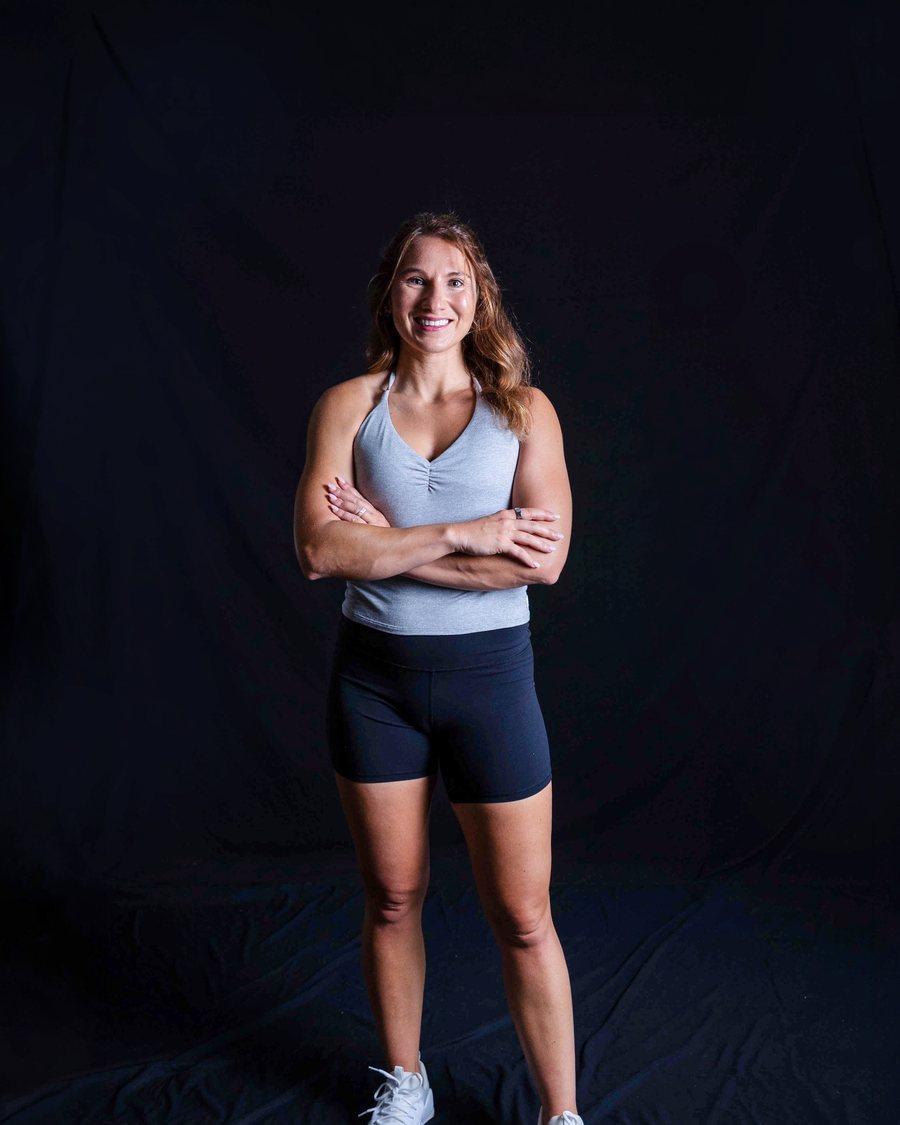
Written by Lindsay Clements
I'm the coach behind FitHer. I've coached 300+ women online over the last 5+ years, and I healed my own binge eating and postpartum metabolism issues before I ever coached anyone else.
Functional Nutrition and Metabolism Specialist · Certified Nutrition Coach · Certified Personal Trainer · M.S. in data analysis · U.S. Navy veteran (12+ years)
How we work on this in FitHer
Every FitHer program runs on the same three phases. In Foundations, we find out what you're really eating, get you eating ENOUGH at regular times, and build protein, fiber, steps, sleep, and your strength program around your schedule. Women coming out of the restrict-binge cycle often stay here longer, and that's completely fine. Progress & fat loss only starts once your eating feels steady, and Reverse & maintain brings your calories back up so you keep your results. There is absolutely NOTHING wrong with maintenance.
On FitHer Coaching and FitHer Custom, you check in with me every week. Had a rough night? Put it in your check-in. We look at the day before it, at your sleep, stress, and hunger, and pick one or two things to try the next week, and any change to your numbers comes with the exact numbers and a trial window. You'll also have the FitHer group chats, with women who know the all-or-nothing thing well.
What women say
"She's helped me change my relationship with food which is so huge for me! I'm feeling so strong and connected with my body..."
"Lindsay has helped me so much when it comes to battling my all or nothing mentality and has helped me realize that I can enjoy life while taking care of my mind and my body too. It doesn't have to be extreme and hard to stick with."
"This is the first diet plan I've done in my adult life that's really gonna stick. Having a day when you eat a little more, that's part of life - it's not something you have to make up for the next day."
Questions I get a lot
Is this therapy for disordered eating?
No. I'm a nutrition coach, not a therapist or registered dietitian, and disordered eating needs a licensed professional too. If you're already working with one, I can coach the nutrition and habits side alongside their care, with their OK.
What if I binge while I'm in the program?
Tell me in your check-in or send me a message. You won't get a lecture, and you won't get a punishment day. We look at what happened before it and pick one small thing to change for next week.
Do I have to track my food?
Most clients log in the app at the start, because it's the fastest way to see whether you're eating enough. If tracking makes food feel more stressful for you, tell me, and we'll find an approach that works for you (and follow your therapist's or dietitian's lead if you have one).
Do you coach women online?
Yes. FitHer is fully online through the Trainerize app, where your workouts, food logging, check-ins, and the group chats with the rest of the FitHer ladies all live.
What does FitHer cost?
FitHer Self-Guided is $99 a month, FitHer Coaching is $279 a month with weekly check-ins, and FitHer Custom is $349 a month with a training plan built only for you. Self-Guided is month to month, and Coaching and Custom have a 4-month minimum, then go month to month.
Can I use my HSA or FSA?
You may be able to. FitHer is HSA/FSA eligible through Truemed, and you can check whether you qualify before you sign up.
Ready to stop the 9pm pantry visits?
Book a free call and tell me what your days and nights look like right now. We'll figure out where to start and which FitHer option fits your life.
More from FitHer
FitHer is nutrition, training, and habit coaching, not medical or mental health care, and it is not treatment for disordered eating. If food feels like it's taking over your life, please talk with your doctor or a licensed therapist first.