FitHer / GLP-1 support
GLP-1 support
GLP-1 nutrition coaching for women on Ozempic, Wegovy, Mounjaro or Zepbound
If you're on a GLP-1 or a similar medication, the best thing you can do for your results is support your body WHILE you're on it: protein first at every meal, strength training a few times a week, and habits that will still be there if you ever come off. I coach women online on exactly that, the nutrition, training and habits side, whether you're on Ozempic, Wegovy, Mounjaro, Zepbound a compounded semaglutide or tirzepatide, or one of the newer medications, or you're planning to come off one.
GLP-1s are here and they're not going anywhere. I'm not pro-GLP-1 and I'm not anti-GLP-1. I'm pro YOU figuring out what works for your body. What I don't do is prescribe, dose, or tell you to start, stop or change your medication. That always goes through your doctor.
I'm Lindsay Clements, a Functional Nutrition and Metabolism Specialist and Certified Personal Trainer, and I've coached 300+ women online over the last 5+ years.
★★★★★ 5.0 on Google from 49 reviews · 300+ women coached
How much protein should I eat on a GLP-1?
Most women on a GLP-1 need more protein than they're getting, and my starting anchor with clients is about 1 gram per pound of your goal body weight, spread across your meals. When your appetite is way down that can feel impossible, so we start where you actually are and build up.
Protein matters even more on these medications because you're eating so much less food overall. It's easy to come up short without noticing, and protein is what helps you hold onto muscle while you lose fat.
The rule I give every woman on a GLP-1: protein first at every meal, even when you're not hungry. Eat the protein on your plate before anything else, so if you get full after a few bites (which happens a lot), the most important part is already done. Fiber comes next. A protein shake or bar is totally fine to fill the gap, I'd just keep it to one or two a day.
What should I eat when I'm not hungry on a GLP-1?
Eat smaller, protein-forward meals at regular times, because on a GLP-1 your hunger can't be the only thing telling you when to eat. A lot of women on these medications go hours without thinking about food, then realize at 4pm they've had a coffee and half a granola bar.
Easy wins when nothing sounds good: greek yogurt, cottage cheese, eggs, deli turkey, or protein powder blended into a smoothie or oatmeal (an easy extra 20-25g). Softer foods and drinks are usually easier to get down when you fill up fast. And truly nothing is off limits.
Calories matter here too, not just protein. Something I see over and over in women I've coached on a GLP-1 is that they struggled to eat enough calories and protein to build muscle. Eating too little leaves you tired and makes your workouts feel awful. If nausea is keeping you from eating, tell your doctor.
How do I avoid losing muscle on Ozempic or Zepbound?
Eat enough protein and strength train 2-4 times a week. Research shows that some of the weight people lose during a big calorie drop, on a GLP-1 or not, can come from muscle and not just fat, and the two things that protect it are protein and lifting.
So yes, you should strength train on a GLP-1. You don't need hours in the gym. Every FitHer program is a progressive strength program built around the equipment and time you actually have, at the gym or at home, and the Daily 20 workouts take 20 minutes a day. We start on the lower end of the rep range and work up to the top of it each week, then add weight.
Muscle helps your energy and makes maintaining your weight a lot easier down the road. It's also why I don't want you judging your progress by the scale alone. Lifts going up and clothes fitting better tell me a lot more.
What happens when you stop Wegovy or Ozempic?
Your appetite usually comes back, and research shows many people regain weight after stopping a GLP-1, especially when their eating and lifestyle habits didn't change while they were on it. The medication quiets hunger. When it's gone, you're left with whatever habits you built, which is exactly why I tell women to start building the habits now, while you're still on it.
Also know this going in: a few pounds up in the first weeks after stopping is usually food and water, not fat. You're eating more, so there's more food in your stomach and more water stored with it. It's expected, and it's why we look at weekly averages instead of one weigh-in.
And please, never change your dose on your own. Tapering, stopping or switching is a plan you make with your doctor. My part is making sure your nutrition and training are ready for whatever that plan is, so coming off doesn't mean starting from scratch.
How do I keep the weight off after stopping a GLP-1?
Keep doing what you built while you were on it: protein and fiber at every meal, strength training, 7k+ steps a day, 7+ hours of sleep, and eating at maintenance calories instead of dieting harder. The habits you build on it are the ones that carry you off it.
A lot of women are scared to eat more after a long stretch of eating very little, and I totally get that. We bring calories up gradually, in small steps every week or two based on how your body responds, until you're at a maintenance number you can live with. There is absolutely NOTHING wrong with maintenance.
Cravings may come back some, and that's normal. They're usually your body asking for something (more food, more sleep, less stress), so we figure out what instead of fighting every one.
Do I need a coach if I'm on a GLP-1?
You don't need one, but a coach covers the part the medication doesn't: what you eat, how you train, and the habits that decide whether your results last. Your doctor manages the medication, and I help with everything you do around it day to day.
Women usually come to me in one of three spots: on a GLP-1 and wanting to feel their best while they're on it, planning to come off one day and wanting the habits in place first, or already off with the scale creeping up and no interest in starting over.
All three are welcome in FitHer. Some of my clients use a GLP-1 as a tool for a season, some decide they don't need one once we start getting results, and some never want to go on one. Tools come and go. Lifestyle change is forever.
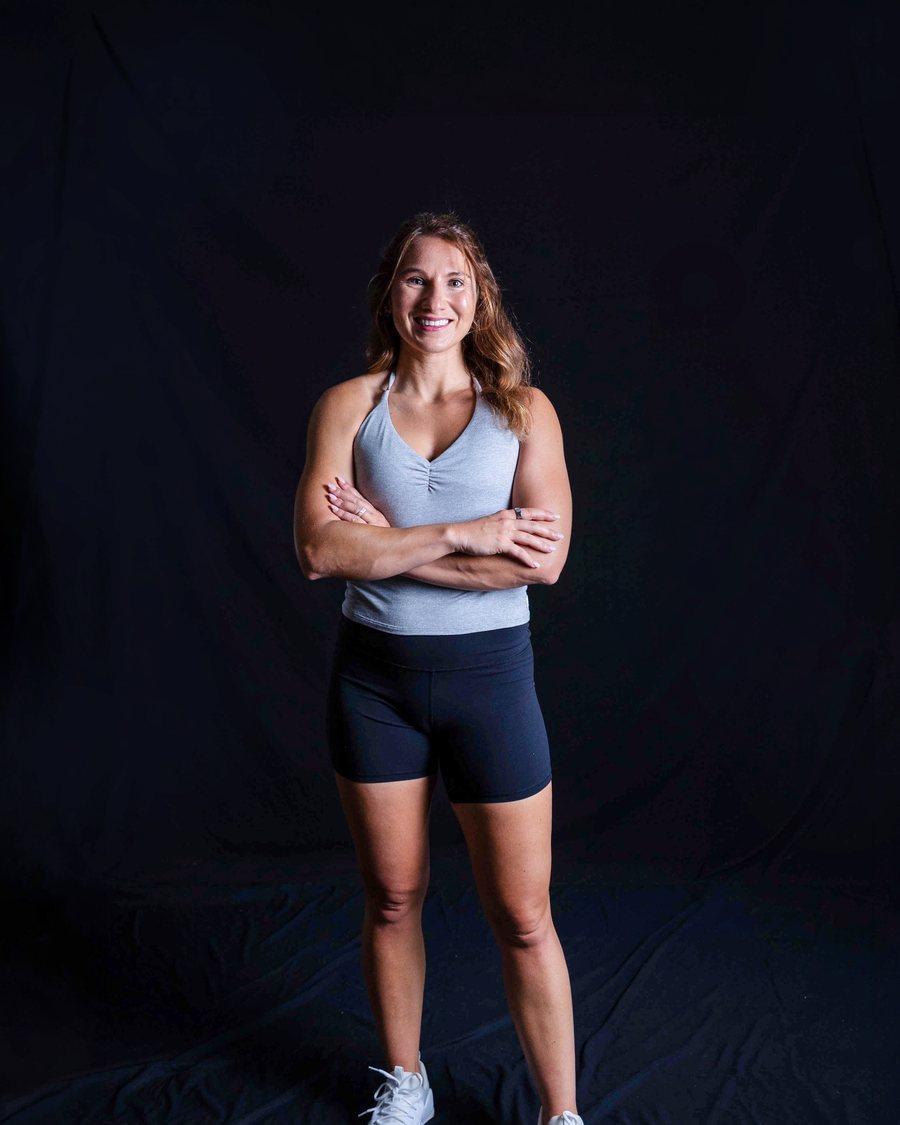
Written by Lindsay Clements
I'm the coach behind FitHer. I've coached 300+ women online over the last 5+ years, and I healed my own binge eating and postpartum metabolism issues before I ever coached anyone else.
Functional Nutrition and Metabolism Specialist · Certified Nutrition Coach · Certified Personal Trainer · M.S. in data analysis · U.S. Navy veteran (12+ years)
How we work on this in FitHer
Every client runs on the same 3-phase FitHer system, with or without a GLP-1. Foundations comes first: logging your food, getting your protein and fiber up, sleep, steps, and a strength program that fits your schedule. On a GLP-1, this is where we make sure you're eating ENOUGH, because a low appetite makes under-eating really easy.
Progress is where we adjust your calories and movement for fat loss and track it weekly. On a GLP-1 your appetite is already doing a lot of the work, so my job is usually keeping the deficit from getting too big. Reverse and maintain brings your calories back up to maintenance so you keep your results, and if you and your doctor decide you'll come off your medication, this is the phase that gets you ready.
On FitHer Coaching or FitHer Custom, I review your check-in every week and we adjust together. The optional labs add-on lets us look at things like insulin, hemoglobin A1c, thyroid and hormones, which may suggest what else your body needs. Anything about your medication goes back to your doctor.
What women say
"I lost 20+ pounds and Lindsey taught me how to lose weight by eating more! She's knowledgeable about what works and I am proof!"
"I'm physically stronger and have a much better attitude about strength training since starting with Lindsay... I'm seeing muscle gains I've not seen ever before with any other group or private health coaching."
"It's the first time I truly feel like I'm on a path that is sustainable and will stick for years to come. Not just a quick weight loss fad diet. I'm approaching 50 and feel better than I have in years!"
Questions I get a lot
Can I join FitHer if I'm on a GLP-1?
Yes! Women on Ozempic, Wegovy, Mounjaro, Zepbound and compounded versions are welcome in every FitHer program. We focus on your protein, calories, strength training and habits so you get the best results while you're on it and keep them if you come off.
What if I'm on tirzepatide or one of the newer weight loss medications?
You're welcome here too. Tirzepatide (Mounjaro, Zepbound) works on more than one hormone, and newer medications that work on even more are on the way, but the coaching side stays the same: enough food, protein first, strength training, and habits that last. Anything about the medication itself stays with your doctor.
Will you tell me whether to start, stop or change my dose?
No. I don't prescribe, dose, or tell anyone to start, stop or change a medication, and that always goes through your doctor. What I do is make sure your nutrition and training support whatever plan you and your doctor decide on.
Should I strength train on a GLP-1?
Yes. Strength training 2-4 times a week, plus enough protein, is the best way to hold onto muscle while you lose weight. Every FitHer program includes a progressive strength program you can do at home or at the gym.
Do you coach women online?
Yes, all of my coaching is online through the FitHer app, so you can join from anywhere. Your workouts, food logging, check-ins and the group chats all live in the app.
What does GLP-1 coaching cost?
There's no separate GLP-1 program. You join one of the three FitHer tiers. FitHer Self-Guided is $99/month, FitHer Coaching with weekly check-ins is $279/month, and FitHer Custom is $349/month. Self-Guided is month to month, and Coaching and Custom have a 4-month minimum. The labs add-on is an optional $300 one-time.
Is it HSA/FSA eligible?
It may be. FitHer coaching may be paid for with HSA or FSA funds through Truemed, and you can check if you qualify when you sign up.
On a GLP-1, or thinking about coming off one?
Book a free call and tell me where you're at. We'll figure out what support you need for the nutrition and habits side, and your doctor stays in charge of the medication.
More from FitHer
FitHer coaching covers nutrition, training and habits and is not medical care; starting, stopping or changing the dose of a GLP-1 or any other medication is always a decision for you and your doctor.