Most of the time you binge at night because you under-ate all day. By 9pm your body is trying to catch up on calories, and your willpower is shot after a full day of "being good." The fix starts at breakfast, by eating ENOUGH earlier in the day, and more willpower was never going to solve it.
I know this one from the inside. For 10+ years I did everything "right" and still felt like a complete failure. I'd be "perfect" all day and then end up standing in my pantry at 9pm, eating one granola bar, then another, then another, then whatever else I could grab. The next morning I'd wake up guilty and spend hours at the gym trying to "fix" it.
A quick note before we go further: I'm a nutrition coach, not a therapist or a registered dietitian. If food feels like it's taking over your life, please talk with your doctor or a therapist, and a coach can work on the nutrition and habits side right alongside that care.
What is the restrict-binge cycle?
It looks like this. Coffee for breakfast, a salad for lunch, maybe a protein bar if you remember, and at 6pm you feel like you crushed it. Then 9pm hits and you're in the pantry. After that comes the guilt, a promise to be stricter tomorrow, and an even smaller breakfast, which sets up the next binge.
Making foods "off limits" feeds it too. The more you tell yourself you can't have the cookies, the louder they get. Once you've had one, the night already feels ruined, so you might as well finish the box.
None of this means you're broken or you lack discipline. Over-restriction leads to mindset spirals, binges, and an unhealthy relationship with food and your body for almost anyone who lives on it long enough.
How do I stop binge eating at night?
Eat more during the day, on purpose, starting with breakfast. It sounds too simple, and for a lot of women it's the piece that changes the most.
With my clients, we start by finding out what you're actually eating right now. Then we build regular meals with real protein and fiber in them, so you're full and you aren't running on fumes by dinner. If you want something sweet after dinner, plan it in and enjoy it. A planned dessert is a lot less likely to turn into a pantry raid than a "forbidden" one.
Sleep and stress matter more than most women expect. Research shows short sleep tends to push hunger and cravings up, so the evening after a five-hour night is harder. We also look at why you're eating at night. Hungry? Exhausted? Bored? Finally alone after a long day? I'll ask before I give advice, because you know your evenings better than anyone and the plan has to fit them.
Should I make up for a binge the next day?
No. Skipping meals or spending hours at the gym to undo it is the step that keeps the cycle going. I did exactly that for years, and it sent me right back to the pantry every time.
After a rough night, eat a normal breakfast with protein, drink your water, take your walk, and carry on with your plan. To gain a pound of fat you'd have to eat about 3,500 calories more than you burn, and most of the jump on the scale the next morning is food and water that haven't moved through yet. That's why we look at weekly averages and never one weigh-in.
It also means you don't wait for Monday to start over. A binge on Thursday plus three written-off days is what actually adds up. Food never has to be earned, and exercise is for getting strong and feeling good.
This is the first diet plan I've done in my adult life that's really gonna stick. Having a day when you eat a little more, that's part of life - it's not something you have to make up for the next day.Hannah M., FitHer client
Is tracking my food making it worse?
It depends on what the tracking is doing for you. I used to count the calories in a stick of gum. I am not exaggerating. I'd log a piece of sugar-free gum, STRESS about it, and wonder if chewing it would burn off the calories in it, because I was that deep in a restriction mindset.
I still check my macros almost every day, and it looks completely different now. It's information. I eat a 500 calorie breakfast most mornings without a second thought (sometimes it's eggs, toast and fruit, sometimes it's a bowl of cereal with little to no nutritional value 😂), because I'm fueling a body that trains hard and keeps up with two kids and a business.
For most women coming out of years of dieting, tracking is the fastest way to learn what ENOUGH actually looks like, especially when you don't trust your hunger yet. If it's making food feel scarier, tell your coach, and find an approach that works for you.
Can I still lose weight if I'm binging?
Yes, but the first step usually isn't a deficit. If you're binging a few nights a week, your weekly average may already be close to maintenance, and cutting harder during the day only makes the nights harder.
So in FitHer we start at maintenance: enough food, regular meals, protein, daily steps, strength training 2 to 4 times a week, and 7+ hours of sleep when life allows. Once your eating feels steady, we talk about a fat-loss phase, a conservative one with an end date. Truly NOTHING is off limits along the way. You can read more about how I coach binge eating and food freedom here.
Quick answers
Why do I binge at night and not during the day?
Usually because the day was too restrictive. Your body is catching up on calories by evening, you're tired, and your willpower has been doing all the work since breakfast.
What should I eat the day after a binge?
A normal breakfast with protein, your water, your walk, and the rest of your plan as usual. No skipped meals and no extra cardio to make up for it.
Is this therapy for binge eating?
No. I'm a nutrition coach, not a therapist or registered dietitian. If your binges are frequent or feel out of control, please talk with a licensed professional, and I can coach the nutrition and habits side alongside their care with their OK.
Do I have to give up my favorite foods?
No. In FitHer truly nothing is off limits. Calories come first, then protein and fiber, with room for the foods you love planned in.
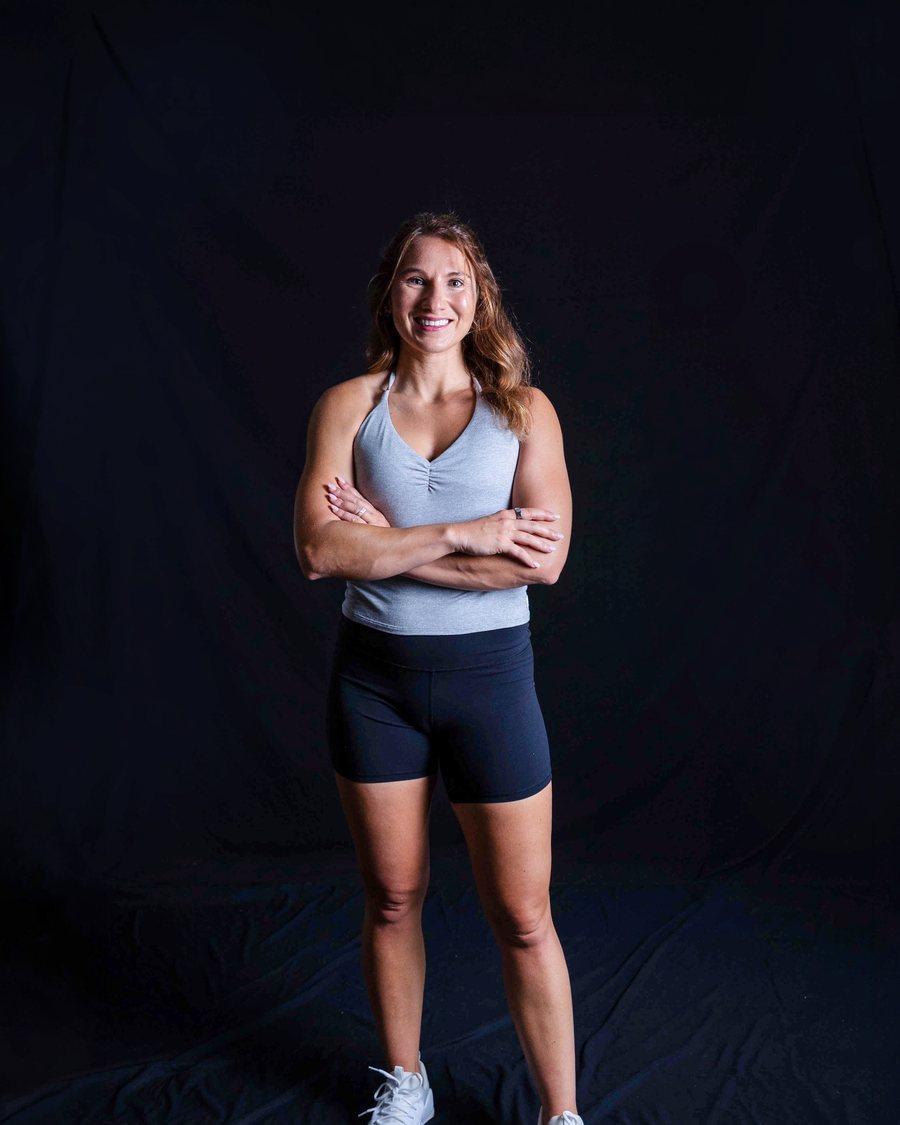
Written by Lindsay Clements
I'm the coach behind FitHer. I've coached 300+ women online over the last 5+ years, and I healed my own binge eating and postpartum metabolism issues before I ever coached anyone else.
Functional Nutrition and Metabolism Specialist · Certified Nutrition Coach · Certified Personal Trainer · M.S. in data analysis · U.S. Navy veteran (12+ years)
Want help doing this for your body?
FitHer is online coaching for women who are done dieting. Pick your level of support, or book a free call and we'll figure it out together.