You stay consistent through a hard season by deciding your bare minimum goals before you need them, counting what you actually did instead of what you missed, and coming back at your next meal instead of next Monday. Consistency doesn't mean checking every box every day. It means you do it on some level.
(I really hate the word "busy," because we're ALL busy. But some seasons have a lot more on the calendar than others, and a lot of it isn't stuff we chose.)
What does consistency actually mean?
Consistency does NOT mean you check every single box every day, or that you feel great doing it. It could be a 20% effort, a 50% effort, or a 100% effort. The fact that you did it is still checking the box.
I had a week this spring where the bathroom leaked through our ceiling on Monday morning, I had a ton of client calls before going out of office, and my oldest had kindergarten registration. There wasn't one day I felt like going to the gym. I went anyway, and nutrition-wise I'd give myself a solid 6 out of 10. I kept logging my food even on the days I wasn't hitting my goals.
That counts. With my clients, 80 to 90% consistency is the target, and it's plenty to see results.
What are bare minimum goals?
Your goal is what you're working toward. Your bare minimum is what keeps you from falling all the way off when life gets hard: a sick kid, a brutal work week, grief, travel, whatever this season is throwing at you.
I have my clients set two or three levels. Level one might be for an extra full day at work: still hit your protein goal, still get some steps in, maybe a shorter workout. Level two might be for a genuinely hard week, like when the entire family is sick. That might be drinking your water and getting a little protein in, nothing else, and that is enough.
Deciding these BEFORE you need them is the important part. You're not making the call from a place of stress or guilt in the moment, because you already know what "still on track" looks like for whatever kind of day shows up.
Mine change with the season. During a week and a half of travel this year, my bare minimums were steps and logging my food. I didn't even really try to hit my macros on that trip, and those two things still kept me feeling like I was taking care of myself.
Why does missing one day turn into missing a week?
Because of the "screw it" that comes after. Say you've got ten things on your list: water, protein, steps, sleep, your lifts, and so on. It's a crazy week and you hit five. Your brain files that week under FAILED, right next to the weeks you did nothing at all. But five is more than zero!!
What actually sets you back is everything that follows. The week's already ruined, so you skip the walk, stay up scrolling until midnight, skip lunch and end up in the pantry at 9pm, and promise yourself you'll start over Monday. That week doesn't land at zero. It goes NEGATIVE, and Monday-you has to climb out of a hole before she can even get started.
Keep your bar high. I actually love that about the type-A women I coach. Just let the fives (and the 0.5s and the 1s) count too.
Lindsay has helped me so much when it comes to battling my all or nothing mentality and has helped me realize that I can enjoy life while taking care of my mind and my body too. It doesn't have to be extreme and hard to stick with.Ellie H., FitHer client
How do I get back on track after falling off?
Don't try to come back at 100%. Pick your bare minimums, the two or three things you can hit even in a messy week, and do those. Maybe that's 5k steps instead of 10k, or logging just breakfast instead of every meal. You don't need a perfect Monday or a full fridge first.
Watching hundreds of women go through hard seasons, I've seen the same pattern over and over. The ones who keep some version of their bare minimum going continue to make progress. The ones who go all the way back to zero usually take months to find their way back, mostly because of the guilt and shame, not the actual habits they lost.
If the scale jumped after a weekend away, that's not fat. You'd have to eat about 3,500 calories above what you burn to gain a pound of it. Go back to your normal plan, not a stricter one.
How do I set myself up before a crazy week?
Spend a few minutes on the weekend asking what would help next week go better, then do one thing about it. Maybe it's prepping meals in containers, ordering premade lunches from a local meal prep company, or blocking off gym time in your calendar.
Shorter workouts help too. A 20-minute workout counts, and for a lot of women it's the one that actually happens, which is why I built the FitHer Daily 20. And when you can't do everything, the order I give clients who are spread thin is calories first, then protein, then steps, then strength. You can read more about how I coach this on my sticking with a plan page.
Those little habits really add up. You'll be surprised how much progress you can still make through a crazy season just by being aware and tracking your data.
Quick answers
Should I wait until life calms down to start?
Life rarely calms down on its own, so we plan for the hard weeks instead. On those weeks we switch to bare minimum goals, and the Daily 20 workouts take just 20 minutes a day.
How many bare minimum levels should I have?
Two or three. One for an extra full day, one for a genuinely hard week, and you pick them yourself so they're small enough to hit.
Do I have to track my food perfectly to be consistent?
No. We aim for 80 to 90%, and a rough estimate in your food log is still SO much better than nothing.
What if I keep restarting every Monday?
Come back at your next meal instead. Eat a normal breakfast with protein, get your steps in, and skip the extra cardio or skipped meals to make up for anything.
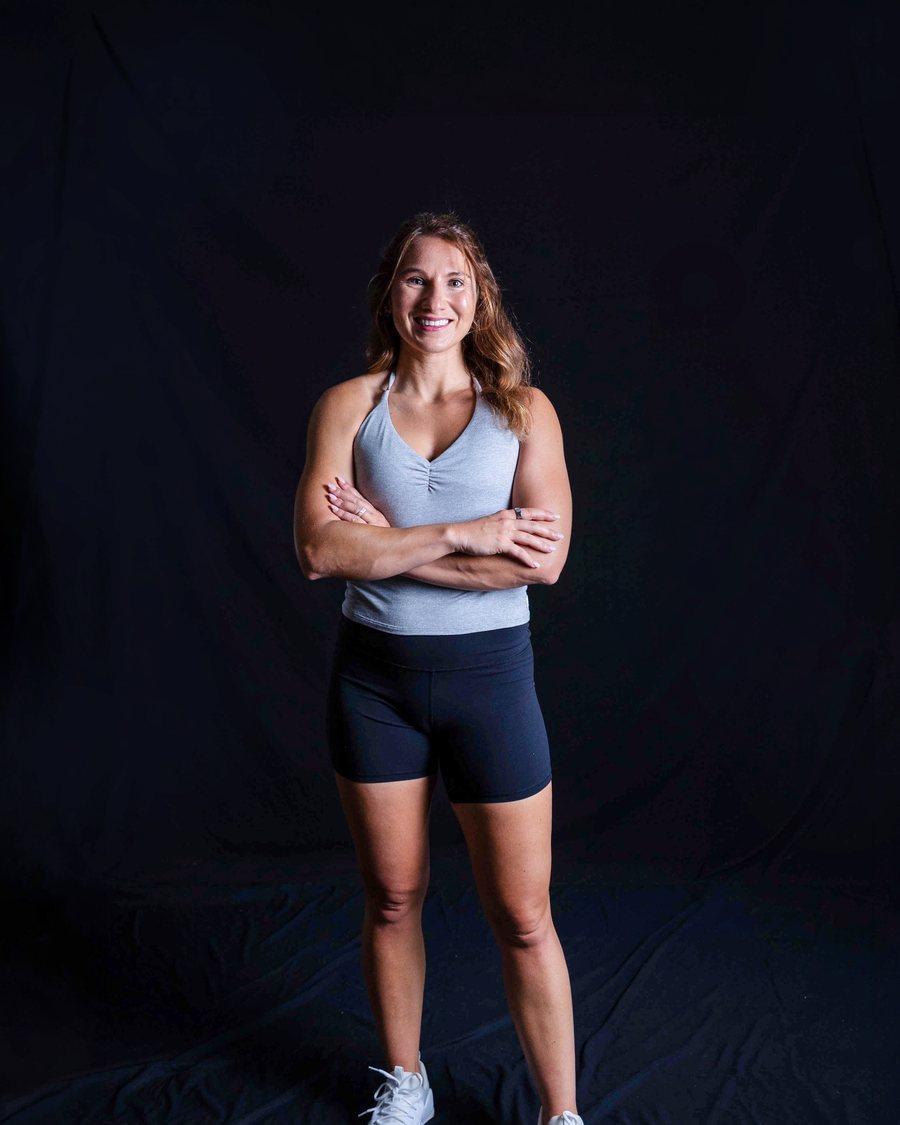
Written by Lindsay Clements
I'm the coach behind FitHer. I've coached 300+ women online over the last 5+ years, and I healed my own binge eating and postpartum metabolism issues before I ever coached anyone else.
Functional Nutrition and Metabolism Specialist · Certified Nutrition Coach · Certified Personal Trainer · M.S. in data analysis · U.S. Navy veteran (12+ years)
Want help doing this for your body?
FitHer is online coaching for women who are done dieting. Pick your level of support, or book a free call and we'll figure it out together.